


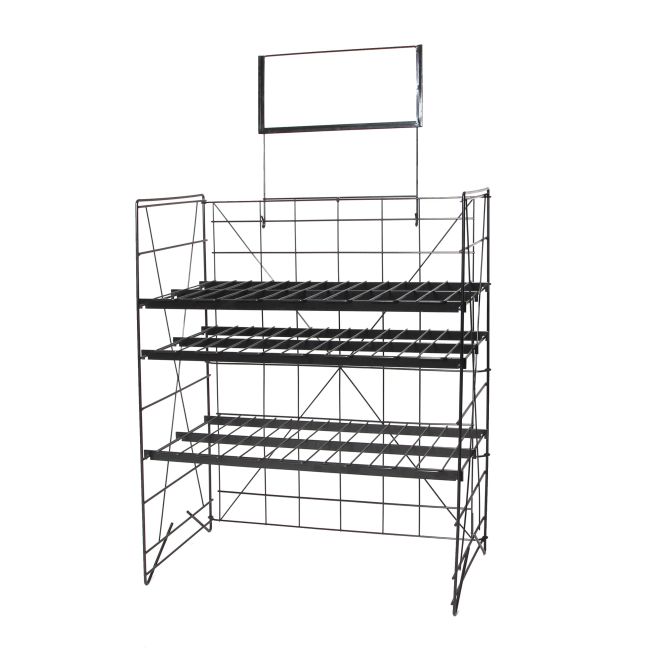
Wire racks are indispensable tools in both retail and industrial sectors, offering versatile and efficient storage solutions. Designed for optimal space utilization, wire racks come in various forms and cater to numerous applications. This comprehensive article delves into the intricate world of wire racks, covering their principle, manufacturing processes, types, materials, and benefits. We will also provide insights into choosing the right wire rack for your needs and discuss the leading manufacturer, Formost, at the end of this article.
Introduction to Wire Racks
● Definition and Basic Function
A wire rack is a level wire structure designed to store and display a variety of products, often found in retail and industrial settings. The base surface of these racks comprises multiple latticed or interlaced metal strands, providing sturdy yet lightweight support. While similar to wire shelving, wire racks are generally smaller units or ledges not meant to stand alone.
● Differentiation from Wire Shelving
Although wire racks and wire shelving share similar purposes, there are distinct differences. Wire racks are typically smaller and designed for specific uses like cooling or displaying items, whereas wire shelving is more versatile for general storage. Wire racks often have multiple tiers and can be stackable, making them ideal for maximizing vertical storage space.
● Common Uses in Retail and Industrial Sectors
Wire racks find extensive applications in both retail and industrial sectors. In retail, they are used as display stands to showcase products like magazines, baked goods, and merchandise. Industrial applications include cooling racks for baked goods, drying racks, and storage for various items. Wholesale wire rack display stands are commonly seen in stores, providing a practical solution for product organization and visibility.
Principle of Wire Racks
● Formation and Structure
Wire racks are formed through wire bending processes, where metal wires are bent into specific shapes and configurations. These wires are interlaced to create a sturdy and supportive structure. The design of wire racks often includes multiple tiers or stackable units, providing additional vertical storage space.
● Benefits of Latticed or Interlaced Metal Strands
The latticed or interlaced design of wire racks offers numerous benefits, including:
- Strength and Durability: The interwoven metal strands provide robust support for storing various products.
- Airflow: The open design allows for continuous airflow, making wire racks suitable for items that require ventilation, such as baked goods.
- Visibility: The wire construction ensures visibility from all angles, which is essential for retail display stands.
● Types of Storage Applications
Wire racks are used for various storage applications, including:
- Retail Displays: Wire rack display stands are perfect for showcasing merchandise, brochures, and magazines.
- Industrial Storage: In industrial settings, wire racks are used for storing tools, equipment, and other items that require organization and easy access.
-
● Cooling Racks
: Wire racks are commonly used in baking to cool items by allowing air to circulate freely around them.Wire Forming Techniques
● CNC Wire Bending and Its Components
CNC (Computer Numerical Controlled) wire bending is a modern technique used to form wire racks. A CNC wire bending machine comprises several critical components:
- Coil Feeder: Ensures the wire is cut from the coil without snagging or tangling.
- Straightener: Guarantees the wire's straightness for precise bending.
- Chamfering: Removes burrs and sharp edges from the cut wire.
- Forming Head: The part where the wire is bent into the desired shapes and angles.
- Cutting Mechanism: Shears the wire to the correct length after bending.
● Manual Wire Forming Methods
Manual wire forming is an older technique that involves using hand-operated machines to bend wire. These machines feature a spindle and hand lever, along with gears that amplify the bending pressure. Although less efficient than CNC bending, manual wire forming is still used for custom or small-scale projects.
● Hydraulic and Pneumatic Wire Forming Processes
Hydraulic wire forming uses a hydraulic motor to power the shaping rollers, while pneumatic wire forming relies on air pressure to push the wire through the straightening system and cut it to the correct length. Both methods offer precise wire bending capabilities, although CNC bending remains the most advanced and versatile technique.
Manufacturing Wire Racks
● Bending Wires into Specific Shapes
Manufacturing wire racks requires bending wires into specific shapes and configurations. The wire must be bent beyond its yield strength but within its tensile strength, ensuring that it maintains the desired shape without breaking.
● Machines Used in Production
High-tech machines are employed in the production of wire racks, such as CNC wire bending machines. These machines can bend wires up to 1 ½ inches in diameter quickly and accurately. Using advanced machinery ensures consistency and efficiency in wire rack manufacturing.
● Ensuring Durability and Strength
The durability and strength of wire racks are crucial factors in their design and manufacturing. By using high-quality materials and precise bending techniques, manufacturers can produce wire racks that withstand heavy loads and continuous use.
Wire Welding Methods
● Different Welding Processes: MIG, TIG, ERW
Welding is a critical step in wire rack manufacturing, joining the bent wires to create a cohesive structure. Several welding methods are used, including:
- MIG Welding: Metal Inert Gas welding uses an inert gas to protect the weld area from contamination.
- TIG Welding: Tungsten Inert Gas welding involves using a tungsten electrode to produce the weld.
- ERW Welding: Electric Resistance Welding uses an electrical current and mechanical pressure to join the wires.
● Importance of Welding in Wire Rack Construction
Welding ensures the structural integrity of wire racks, providing a strong and stable frame. High-quality welding techniques are essential for preventing weak points that could compromise the rack's durability and load-bearing capacity.
● Quality Checks for Welded Joints
Manufacturers perform rigorous quality checks on welded joints to ensure they meet industry standards. These checks include visual inspections, stress testing, and non-destructive testing methods to verify the weld's strength and integrity.
Finishing Wire Racks
● Plating, Coating, and Painting Options
Once the wire racks are formed and welded, finishing processes are applied to enhance their appearance and functionality. Common finishing options include:
- Plating: Adding a metal layer to the wire rack for enhanced corrosion resistance and aesthetics.
- Coating: Applying a protective layer, such as powder coating, to prevent rust and damage.
- Painting: Using high-quality paints to add color and protection to the wire racks.
● Preventing Rust and Corrosion
Finishing processes are crucial for preventing rust and corrosion, especially for wire racks used in humid or outdoor environments. Properly finished wire racks have a longer lifespan and maintain their appearance and functionality over time.
● Additional Modifications: Grooves, Cuts, Heading, Swaging
In some cases, additional modifications are necessary to meet specific design requirements. These modifications can include adding grooves, cuts, heading, and swaging to the wire racks. The primary goal is to ensure that sharp edges and burrs are removed, enhancing the rack's safety and usability.
Types of Wire Racks
● Literature Stands
Literature stands are a common type of wire rack used to display magazines, brochures, and other periodicals. They feature multiple levels or adjustable tiers, allowing for easy organization and visibility of the displayed items. Unlike wooden racks, wire literature stands provide visibility from all angles due to their open design.
● Cooling Racks
Cooling racks are specifically designed for baking and food preparation. The open lattice design allows for optimal airflow, ensuring that baked goods cool evenly. These racks are essential for maintaining the quality and texture of baked products.
● Display Racks
Display racks are versatile wire racks used in retail settings to showcase various products. They come in different shapes and sizes, catering to specific display needs. Display racks enhance product visibility and organization, making them an essential tool for retail businesses.
● Specialized Racks for Different Industries
Different industries require specialized wire racks to meet their unique storage and display needs. For example:
- Pharmaceutical Industry: Wire racks are used to organize and store medical supplies and equipment.
- Food Industry: Wire racks are essential for cooling, drying, and storing food products.
- Automotive Industry: Wire racks are used to store tools, parts, and equipment in workshops and manufacturing facilities.
● Customizable Options for Various Needs
Wire rack manufacturers offer customizable options to meet specific needs. Customers can request custom sizes, shapes, and designs to ensure the wire racks fit their unique requirements. This flexibility makes wire racks a popular choice across different industries.
Materials Used in Wire Racks
● Common Materials: Stainless Steel, Aluminum, Coated Metals
Wire racks are made from various materials, each offering different benefits:
- Stainless Steel: Known for its durability and resistance to corrosion, stainless steel is a popular choice for wire racks used in demanding environments.
- Aluminum: Lightweight and corrosion-resistant, aluminum wire racks are ideal for applications where weight is a concern.
- Coated Metals: Metals with protective coatings, such as powder coating, offer enhanced resistance to rust and damage.
● Pros and Cons of Each Material
Each material used in wire rack manufacturing has its pros and cons:
- Stainless Steel: Pros include high strength, corrosion resistance, and durability. Cons include higher cost compared to other materials.
- Aluminum: Pros include lightweight, corrosion resistance, and ease of handling. Cons include lower strength compared to stainless steel.
- Coated Metals: Pros include cost-effectiveness and enhanced protection. Cons include potential wear and tear of the coating over time.
● Suitability for Specific Environments
The choice of material depends on the environment where the wire rack will be used. Stainless steel is ideal for humid or corrosive environments, while aluminum is suitable for applications requiring lightweight solutions. Coated metals offer a balance between cost and protection, making them a versatile choice for various settings.
Choosing the Right Wire Rack
● Assessing Storage Needs and Weight Limits
When choosing a wire rack, it's essential to assess your storage needs and weight limits. Consider the types of items you will store and ensure the wire rack can support the total weight without compromising safety and stability.
● Size, Design, and Aesthetic Considerations
Size and design are critical factors in selecting the right wire rack. Ensure the wire rack fits the available space and complements your existing décor. Aesthetic considerations are particularly important for retail display stands, where appearance can impact customer perception.
● Ensuring Proper Slit or Gap Sizes for Stored Items
The slits or gaps between the wires should be suitable for the items you intend to store. Smaller gaps prevent smaller items from falling through, while larger gaps provide better airflow for cooling racks. Choosing the appropriate slit size ensures the wire rack meets your storage requirements.
Applications and Benefits of Wire Racks
● Retail, Industrial, and Commercial Uses
Wire racks are widely used in retail, industrial, and commercial settings. Retail businesses use wire rack display stands to organize and showcase products, while industrial facilities use them for efficient storage of tools and equipment. Commercial spaces, such as offices and warehouses, benefit from wire racks for their versatility and space-saving design.
● Enhancing Storage Efficiency and Organization
Wire racks maximize storage efficiency by utilizing both horizontal and vertical space. Their open design allows for easy access and organization of stored items, making them an ideal solution for cluttered spaces. Wire racks help businesses maintain a tidy and organized environment, improving productivity and workflow.
● Maintenance Tips for Longevity and Performance
To ensure the longevity and performance of wire racks, follow these maintenance tips:
- Regular Cleaning: Clean the wire racks regularly to prevent dust and grime buildup.
- Inspect for Damage: Periodically inspect the racks for any signs of damage, such as bent wires or loose welds, and address issues promptly.
- Prevent Overloading: Avoid exceeding the weight capacity of the wire racks to prevent structural damage and ensure safety.
---
About Formost
Formost is a leading wire rack display stand manufacturer and supplier, known for producing high-quality wire rack display stands for various industries. With a state-of-the-art factory and a commitment to excellence, Formost offers customizable and durable wire racks to meet your specific needs. Whether you require wholesale wire rack display stands or custom solutions, Formost delivers unparalleled quality and service.
